


BFTI Organized Focus Group Discussion on ‘Competitive Landscape in the Air Ticketing Market of Bangladesh’
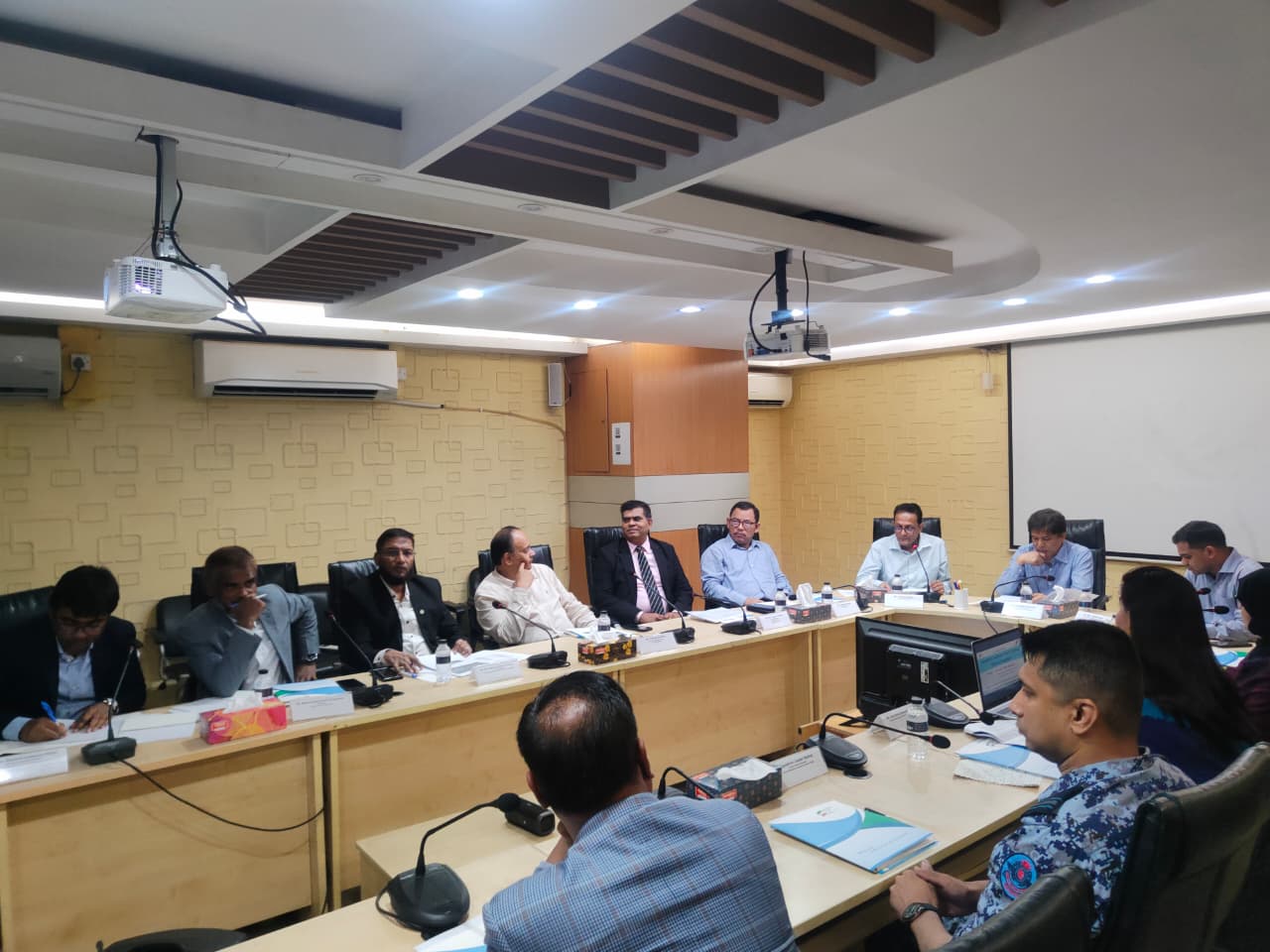 The Chairperson, and participants at the FGD Session

20 May 2026

Conference Room, BFTI
Bangladesh Foreign Trade Institute (BFTI) organized a Focus Group Discussion (FGD) on the study titled ‘Competitive Landscape in the Air Ticketing Market of Bangladesh’ on 20th May, 2026 at the BFTI Conference Room, TCB Bhaban, Karwan Bazar, Dhaka. The study has been commissioned by Bangladesh Competition Commission, Government of the People’s Republic of Bangladesh.
The study aims to analyze the competitive dynamics of Bangladesh’s air ticketing market with a focus on identifying risks of anti-competitive conduct and collusive behavior, to analyze the market structure and concentration of Bangladesh’s aviation industry, to identify if there are any anti-competitive practices (collusion, market barriers ) in domestic/ international air transport, to suggest required regulatory reforms to enhance market competition.
A total of 13 representatives from distinguished government, private and association attended the FGD. Participants included representatives from Civil Aviation Authority of Bangladesh, Hazrat Shahjalal International Airport,, Bangladesh Competition Commission, Consumers Association of Bangladesh, Directorate of National Consumers' Right Protection, IATA Bangladesh, Saudia Airlines, Turkish Airlines GSA, US-Bangla Airlines, Elham Travel Corporation and The Bangladesh Monitor.
Welcome Remark was delivered by Mr. Ahsanul Islam, Joint Director, BFTI. He stated the present Focus Group Discussion (FGD) as part of its data collection process. He explained that these consultations were conducted to gather insights from both public and private sector stakeholders in order to identify the structural and operational challenges prevailing in Bangladesh’s air ticketing market. He further emphasized that the study aims to generate evidence-based policy recommendations to promote fair competition, improve service delivery, and enhance consumer welfare in the sector..
Dr. Saif Uddin Ahammad, Chief Executive Officer (Additional Charge), BFTI, & Joint Secretary, Ministry of Commerce, and Team Leader of the study, chaired the program. In his remarks, Dr. Saif highlighted the significance of the study in understanding the current market structure and addressing emerging competition concerns in the aviation and travel trade sector. He also expressed his appreciation to all stakeholders and extended his gratitude to the participants for their valuable presence and active engagement in the workshop.
After that, a tone-setting presentation was delivered by Ms. Asia Binta Amanat Sumi, Research Associate and Coordinator of the study, BFTI. The presentation highlighted the preliminary findings of the study and identified several important areas requiring policy attention and reform.
Following the tone-setting presentation, an interactive open-floor discussion was held which was moderated by Mr. Md. Julfikar Islam, Research Fellow(Research/Study), BFTI and Chief Analyst of the study.The discussion covered eleven key thematic areas, including market competition dynamics, route-based competition, pricing behavior and coordination, price adjustment strategies, key cost drivers, communication and incentive mechanisms, agent pricing and markup practices, steering behavior, market power and industry structure, barriers to entry and future outlook, and policy recommendations. Participants engaged in comprehensive deliberations across these dimensions, providing in-depth insights into the prevailing conditions and structural characteristics of the industry.
Airline representatives noted that, owing to strategic operational considerations, flight frequencies cannot be readily adjusted in response to seasonal fluctuations in demand. They further indicated that, during peak travel periods, load factors on certain segments of round-trip services to Bangladesh decline substantially, in some cases falling below 5%, thereby resulting in pronounced directional imbalances in passenger flow.
Furthermore, prevailing regulatory frameworks, elevated airport charges, currency exchange rate, Government double taxation policy, airport security charges, type of aircraft and fuel prices, as well as inadequate infrastructural facilities at various airports, collectively contribute to increased operational costs. These cost pressures are subsequently reflected in airfares, leading to persistently higher ticket prices throughout the year as operators adjust pricing to offset additional expenditures.
Travel agencies stated that several factors contribute to the high price of air tickets. They noted that fuel costs in Bangladesh are comparatively higher than in many other countries. In addition, airport-related service charges, including ground handling fees, are also significantly elevated. It was further observed that Biman Bangladesh Airlines benefits from the country’s dependency on a single airport and the exclusive authorization granted to a single company for ground handling services. Consequently, this arrangement creates a monopolistic structure that enables the determination of service charges at the airports, thereby increasing overall operating costs.
Travel agencies further explained that limited understanding of airlines’ dynamic pricing system often leads to passenger misconceptions, as travelers tend to book tickets at the last minute and subsequently attribute higher fares to travel agencies. They also highlighted that unregistered travel agencies mislead customers by providing inaccurate information, thereby exacerbating the situation.
Moreover, the travel agencies refuted allegations that they engage in group bookings to inflate airfare, clarifying that such reservations are consistently processed through official airline channels. They further suggested that the government may consider establishing a fare ceiling for specific routes to ensure greater price stability and affordability. In addition, they emphasized the importance of identifying the underlying reasons behind the previous inability of local airlines to sustain operations and adopting appropriate corrective measures in light of these challenges.
Government officials, in response, acknowledged the concerns raised by stakeholders and stated that efforts are already underway to implement necessary regulatory reforms. They further noted that, upon the full operationalization of the new terminal, the annual passenger and cargo handling capacity of Hazrat Shahjalal International Airport (HSIA) is expected to double. It was also highlighted that passengers are at times exposed to misleading advertisements, necessitating improved regulatory oversight. Officials underscored that enhanced coordination among the Ministry of Commerce, the Civil Aviation Authority of Bangladesh, and the Ministry of Civil Aviation and Tourism would be essential in addressing these challenges. Furthermore, they expressed optimism that the operationalization of the third terminal of HSIA will significantly improve overall service efficiency and sectoral performance.
Related Events
 BFTI and ERF Unite to Strengthen Trade and Economic Discourse in Bangladesh
Closed

9 September 2026
Conference Room, BFTI
63rd Meeting of the Board of Directors of Bangladesh Foreign Trade Institute (BFTI)
Closed
21 July 2026
Conference Room, BFTI
BFTI Organized a Validation Workshop on Anti-Export Bias and Trade Remedy Issues
Closed
14 June 2026